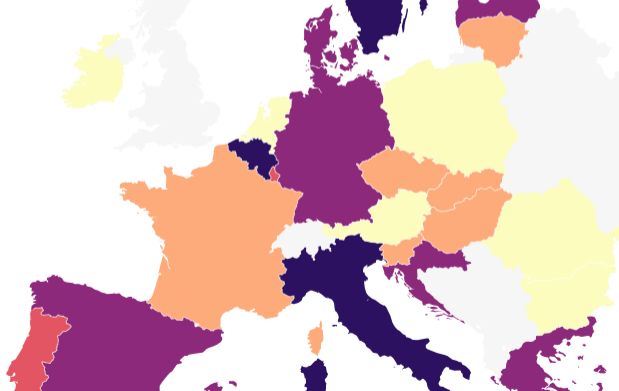
While all 27 EU member states now provide paid parental leave in line with the directive on work-life balance for parents and carers, the way the measure is implemented varies widely across the bloc. Significant disparities remain regarding transferability, duration, the period during which parents may take the leave, and the level of compensation provided. Moreover, nearly three years after the directive entered into force, some countries still fall short of the standards required under EU law.
Enjoy this article for free while you’re in your trial period
You have access to our content for 1 month.

By establishing a minimum parental leave of four months for each parent (17 weeks), including two non-transferable to the other parent, European legislators aimed to promote a better sharing of family responsibilities and thus improve professional equality between women and men. The European directive on work-life balance for parents and carers, adopted in 2019, has thus enabled real progress in many countries, such as Hungary, for example, where no parental leave existed until then. However, w

You are reading this article thanks to your trial period.
Explore new horizons by checking out our other verticals:
You are reading this article thanks to your subscription to Mind Retail.
Explore new horizons by checking out our other verticals:
Do you have information to share with us?
What you absolutely must read this week
The essential content of the week selected by the editorial team.
See all
EU: social partners set out position on guidelines for the sustainability due diligence directive
The news. Following the final adoption of the omnibus directive in February, the European Commission launched a consultation in June aimed at guiding it in drafting guidelines on the application...
28 August 2026
United Kingdom: government launches consultation on AI and data protection rules
L’info. Le gouvernement britannique a lancé, du 15 juillet au 9 septembre 2026, une consultation afin d’identifier les dispositifs juridiques, techniques et de gouvernance...
28 August 2026
Spain: government seeks to strengthen protection for employee whistleblowers
On 28 July, the Spanish Council of Ministers approved a draft bill aimed at providing legal protection to employees who report corruption or breaches of labour law, shielding them from potential...
27 August 2026
Germany: introduction of the concept of partial incapacity for work
The news. On 10 July, the German Parliament definitively adopted the “Act to Stabilise Contribution Rates in the Statutory Health Insurance System”...
Most viewed articles of the month on mind HR
What readers clicked on the most last month.
1
Spain: government seeks to strengthen protection for employee whistleblowers
On 28 July, the Spanish Council of Ministers approved a draft bill aimed at providing legal protection to employees who report corruption or breaches of labour law, shielding them from potential...
27 August 2026
2
Netherlands: Uber fined over 800 million euros for automated algorithmic decisions
The news. In a decision dated 17 August, the Dutch Data Protection Authority fined ride-hailing company Uber €825 million for automating decisions regarding driver account deactivations. The...
3
Germany: introduction of the concept of partial incapacity for work
The news. On 10 July, the German Parliament definitively adopted the “Act to Stabilise Contribution Rates in the Statutory Health Insurance System”...
4
Portugal: open consultation on the transposition of the Pay Transparency Directive
The news. On 5 August 2026, the Portuguese government published a document proposing a draft text to transpose the EU Pay Transparency Directive as the basis for a public consultation open until...