National industrial relations
Trending topics
- CSRD
- Corporate sustainability due diligence
- Gender equality
- mind Exclusive
- European Framework Agreement
- hybrid work
- EWC agreements and recast directive
- Artificial intelligence
- Collective agreement
- Managing the fallout of Covid-19
- Skills
- Gig workers and the regulation of platforms
- Older workers
- Global Framework Agreements
- Remote work regulations
Poland: Solidarnosc demands wage increases
The national Commission of Solidarnosc asked, on June 1, that the wage increase follow that of productivity. According to the trade union, this should be an obligatory standard in Poland. (Ref...
6 June 2006
Great-Britain : Workers at Peugeot’s Ryton factory vote against strike
According to the Transport and General Workers' Union (TGWU), workers at Peugeot's Ryton plant voted not to go on strike to defend the plant, which is scheduled to close in 2007. (Ref. 06565)
5 June 2006
Volkswagen: management is ready to pay a lot to accelerate job cuts
At the beginning of May, Volkswagen announced its intention to cut 20000 jobs, mainly in its German factories. But the collective agreement currently into force excludes any lay-off until 2011...
2 June 2006
Spain: agreement on a plan to support the textile and clothing industries
The government, trade unions and employers' organization of textile concluded, last 26 May, an agreement on a plan to support the textile and clothing industries, which will be granted 870 million...
1 June 2006
Germany: lower than unexpected unemployment, but tense situation on the apprenticeship market
During a press conference on 31 May 2006 in Berlin, Michael Glos, German Minister for Economy, was pleased with the retreat of unemployment in May, announced the same morning by the national...
1 June 2006
Daihatsu could locate a new factory in the Czech Republic or in Slovakia
The Japanese car producer wants to build small cars in Eastern Europe. (Ref. 06547)
31 May 2006
Germany: for the DGB, the fight against decreasing memberships is an absolute priority
The congress of the federation of German trade unions (DGB) gave a progress report on its initiative launched in 2005, to fight against decreasing membership. Six projects were introduced, aimed...
29 May 2006
Germany: trade unions want to revive the debate over the EU Constitution
During his keynote speech, the president of the federation of German trade unions (DGB), Michael Sommer, proposed a revival of the debate over the European Constitution and demanded a harmonized...
29 May 2006
Netherlands: college graduates start working with low wages
The wages of young college graduates beginning their career did not increase in 2005, according to a study of Hay Group. For some diplomas, the level of wages even dropped. (Réf. 06530)
26 May 2006
Germany: the DGB sets out its expectations for labour market reform
Meeting at its congress which began on 22nd May, the federation of German trade unions (DGB) highlighted the plans to reform the labour market, starting with a minimum wage.(Ref. 06526)
25 May 2006
Hungary: agreement is finally concluded at Auchan
After several weeks of negotiations, the management of Auchan in Hungary reached an agreement with employees' trade union. (Ref. 06523)
25 May 2006
Germany: the minimum wage under debate at the German trade union congress
During the visit of Angela Merkel (CDU) to the congress of the Confederation of German Trade Unions (DGB) in session since Monday 22nd May, the minimum wage came under debate. (Ref. 06519)
24 May 2006
Belgium : administrative simplifications for personnel management
The Council of Ministers meeting on 19th May approved a series of measures aimed at simplifying human resources management to promote a “paperless personnel policy”. (Ref. 06521)
24 May 2006
Spain : Trade unions criticize the lack of labour inspectors
Spain has one labour inspector for 23 300 workers, which is half than elsewhere in the EU, where the average is one inspector for 12000 workers. According to trade unions, which denounce this...
24 May 2006
Slovenia: agreement on employment relationships in a deadlock
Negotiations on a social agreement for the period 2006-2009 are in a deadlock again . Employers consider that the social agreement will not to be adopted in the first half of 2006. (Ref. 06512)
23 May 2006
Czech Republic : President vetoes new Labour Code
The introduction of the new Labour Code in the Czech Republic must overcome yet another obstacle. After a veto in the Senate which was overturned by another favorable vote of the national...
23 May 2006
Our mind news
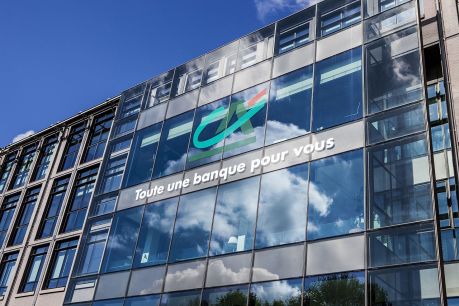
Crédit Agricole is to adopt stricter rules on remote work from mid-March onwards. The rules will be tightened for employees, but the maximum number of days working remotely will remain unchanged.
29 January 2026

The three representative trade unions at Orange France have until 10 December to validate an agreement on gender equality, work–life balance and anti-discrimination measures. While the text...
8 December 2025

In 2025, for the first time, the universal registration documents of major European companies contain the sustainability reporting required by the EU Corporate Sustainability Reporting Directive...
31 October 2025

Candice Guillot, group director of employee experience and HR performance at Talan (7,000 employees), outlines for mind RH her vision and strategy for introducing artificial intelligence at the...
20 October 2025
Most viewed articles of the month on mind HR
What readers clicked on the most last month.
What readers clicked on the most last month.
1
Oliver Dietrich (IG Metall): “The advent of AI can be a means of deepening social partnership within companies”
In Germany, trade unions want to influence how AI is deployed in companies. Oliver Dietrich is an AI project manager at the regional office of the IG Metall trade union in North Rhine-Westphalia...
21 January 2026
2
Germany: collective bargaining negotiations begin in chemical industry
Collective bargaining talks in Germany’s chemical and pharmaceutical industries are due to open this week, covering nearly 580,000 employees across around 1,700 companies. With the sector facing...
3 February 2026
3
Italy: collective agreement for rubber and plastics sector focuses on new skills
A month ahead of schedule, the Federazione Gomma Plastica employers' organisation and the Filctem-Cgil, Femca-Cisl and Uiltec trade unions have renewed the collective agreement for the rubber and...
5 January 2026
4
Italy: new generational renewal agreement penned at UniCredit
The agreement signed on 30 December by UniCredit, Italy’s second-largest banking group, with the Fabi, First-Cisl, Fisac-Cgil, Uilca and Unisin trade unions aims to continue generational...
15 January 2026
5
France: social partner talks extend far beyond contractual terminations
After a false start on 3 December, French social partners resumed talks on 7 January 2026 on potential changes to the unemployment insurance agreement, including the rules governing compensation...
12 January 2026
6
EU: banking sector social partners commit to combating violence and harassment
On 15 January, the trade union federation UNI Europa Finance and three employers’ associations in the banking sector signed a joint statement on preventing violence and harassment in the...
16 January 2026